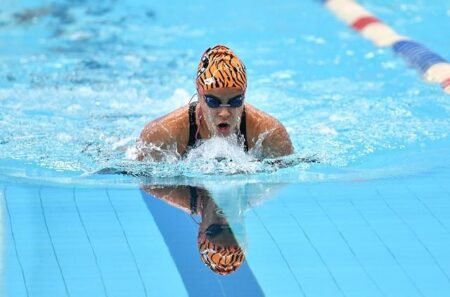


Australian swimming sensation Mollie O’Callaghan has officially withdrawn from the upcoming Pan Pacific Swimming Championships due to an ongoing back injury. The decision comes as a significant setback for the 18-year-old, who has been a standout performer on the international stage. O’Callaghan’s withdrawal not only impacts Australia’s medal prospects but also raises concerns about her preparation for upcoming major competitions.
Mollie O’Callaghan’s Sudden Withdrawal Shakes Up Pan Pacs Lineup
Mollie O’Callaghan, one of Australia’s brightest swimming stars, has announced her withdrawal from the Pan Pacific Swimming Championships due to a persistent back injury. The decision comes as a major blow to the national team’s medal prospects, particularly in the freestyle events where O’Callaghan has consistently dominated. Medical assessments revealed that continuing to compete could exacerbate the injury, prompting the athlete and coaching staff to prioritize her long-term health over immediate competition.
This sudden change has led to a reshuffle in the team’s lineup, with emerging swimmers now stepping up to fill the void. The impact is particularly notable in these key events:
- Women’s 100m Freestyle
- Women’s 200m Freestyle
- Women’s 4x100m Freestyle Relay
| Event | Previous Lead Swimmer | New Contender |
|---|---|---|
| 100m Freestyle | Mollie O’Callaghan | Sophie Yates |
| 200m Freestyle | Mollie O’Callaghan | Ella Freeman |
| 4x100m Freestyle Relay | Mollie O’Callaghan | Team Reconfiguration |
Understanding the Impact of Ongoing Back Injuries on Elite Swimmers
For elite swimmers like Mollie O’Callaghan, back injuries present a significant challenge that extends beyond physical discomfort. These injuries often disrupt rigorous training schedules and can lead to prolonged absences from major competitions, ultimately affecting an athlete’s career trajectory. The spinal stress from repetitive strokes and turns makes the lumbar region especially vulnerable, causing issues such as muscle strain, herniated discs, or nerve impingement. Such conditions not only impede peak performance but also demand careful management to avoid long-term damage.
Key consequences of ongoing back injuries in elite swimmers include:
- Reduced training intensity and volume
- Increased recovery time between sessions
- Heightened risk of re-injury or chronic pain
- Psychological impact due to missed competitions
| Injury Type | Common Symptoms | Impact on Performance |
|---|---|---|
| Muscle Strain | Localized pain, stiffness | Reduced flexibility, slower start times |
| Herniated Disc | Numbness, radiating pain | Decreased endurance, compromised stroke mechanics |
| Nerve Impingement | Weakness, tingling | Loss of power, limited range of motion |
Recovery Strategies and Future Outlook for O’Callaghan’s Competitive Career
Mollie O’Callaghan’s team has prioritized a multidisciplinary approach to her recovery, integrating physiotherapy, targeted strength training, and advanced medical interventions. A combination of aquatic therapy and tailored core stabilization exercises aims to reduce strain on her back while maintaining cardiovascular fitness. Regular consultations with sports medicine specialists ensure her progress is carefully monitored, minimizing the risk of aggravating the injury during rehabilitation.
Looking ahead, her coaching staff remains cautiously optimistic about her return to competitive swimming. Key recovery milestones have been outlined to gauge readiness, with the goal of ensuring long-term health without compromising performance goals. The table below summarizes the primary focus areas and projected timelines for Mollie’s phased comeback:
| Recovery Phase | Focus Area | Estimated Duration | ||
|---|---|---|---|---|
| Acute Rehab | Pain Management & Mobility | 4-6 weeks | ||
| Strength Building | Core Stabilization & Flexibility | 6-8 weeks | ||
| Performance Conditioning | Swimming Drills & Endurance | 8-12 weeks | ||
| Return to Competition | Full Training & Race Simulation | Return to Competition | Full Training & Race Simulation | 4-6 weeks |
If you’d like, I can help you review or enhance this section further!
To Wrap It Up
Mollie O’Callaghan’s withdrawal from the Pan Pacific Swimming Championships marks a significant setback for the Australian team, which had counted on her strong performances in the pool. As she focuses on recovery and rehabilitation, the swimming community will be watching closely to see when the young star can return to competition at her best. O’Callaghan’s situation underscores the physical demands of elite swimming and the importance of athlete health in the pursuit of excellence.