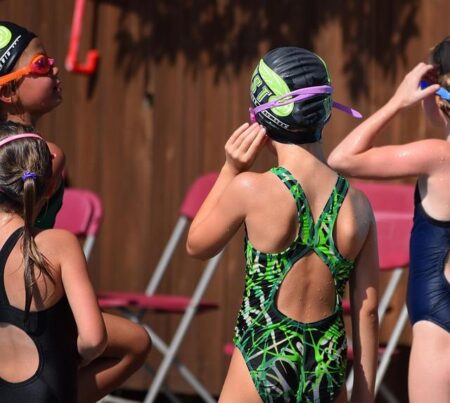


In the competitive world of swimming, the Individual Medley (IM) race is widely regarded as one of the most challenging events, demanding mastery across all four strokes-fly, backstroke, breaststroke, and freestyle. Yet, even seasoned swimmers often fall prey to common mistakes that can cost precious seconds and impact overall performance. From inefficient transitions to pacing errors, these pitfalls can hinder progress and undermine race strategy. This article explores the most frequent Individual Medley race mistakes and offers practical solutions to help swimmers refine their technique, improve efficiency, and ultimately achieve faster times in the pool.
Common Pitfalls in Stroke Transitions and How to Avoid Them
Stroke transitions are often where individual medley races lose their momentum, leading to unnecessary time loss and fatigue. One of the most frequent errors is the failure to maintain a streamlined position during the changeover, which increases drag and disrupts the swimmer’s rhythm. Swimmers also tend to mistime their transitions, either pushing off too early or too late, resulting in slower overall splits. This is especially problematic when moving between backstroke and breaststroke, where the change in body orientation demands precise timing and body control. To avoid these pitfalls, focus on mastering the push-off mechanics and practicing smooth, controlled turns in training sessions, emphasizing breath control and body alignment.
Another common oversight involves underestimating the importance of stroke-specific muscle engagement during transitions. For example, switching from freestyle to butterfly requires quick activation of different muscle groups, and a lack of preparedness can cause a dip in speed and efficiency. Developing transition drills that simulate real race scenarios can help condition swimmers to adjust their stroke mechanics swiftly. Consider incorporating targeted exercises such as hypoxic sets and resistance band workouts to build strength and flexibility. Below is a quick reference of key focus areas during each stroke transition in the IM:
| Transition | Primary Focus | Common Mistake | Correction |
|---|---|---|---|
| Butterfly to Backstroke | Breath timing | Rushing breath, poor glide | Practice breath control and streamline |
| Backstroke to Breaststroke | Body rotation and push-off angle | Off-angle push-off, slips | Drills for wall contact and rotation |
| Breaststroke to Freestyle | Leg kick power | Weak push-off, sluggish start | Strength training and explosive kicks |
Mastering the Turn Techniques That Cost Valuable Seconds
In IM races, turns aren’t just transitional moments-they’re critical junctures where races can be won or lost. A frequent mistake swimmers make is underestimating the importance of a powerful, well-timed push-off combined with streamlined body positioning. Instead of focusing solely on speed, elite competitors emphasize maintaining momentum through efficient turns. Coaches recommend practicing compact rotations and utilizing the two-hand touch (for breaststroke and butterfly) with precision to minimize wasted movement and conserve energy for the next lap.
Simple adjustments to elevate your turn:
- Keep your head down and maintain a tight streamline off the wall.
- Use the wall as a leverage point, exploding off with your strongest leg.
- Practice transitioning smoothly from one stroke to the next without hesitation.
- Time your breathing to avoid disrupting your momentum during the turn.
| Turn Element | Common Mistake | Effective Fix |
|---|---|---|
| Approach Angle | Too steep or too shallow | Enter wall at ~45° for tighter rotation |
| Push-off Strength | Weak leg drive | Focus on explosive, balanced kick |
| Streamline Position | Loose arms or head up | Lock arms, tuck head for minimal drag |
Optimizing Breathing Patterns for Sustained Endurance and Speed
Mastering efficient breathing is often overlooked but remains a critical factor in achieving peak performance during the individual medley. Swimmers who fail to optimize their breathing risk early fatigue and reduced stroke efficiency, especially in the butterfly and freestyle legs where oxygen demand soars. Incorporating rhythmic breathing patterns tailored to each stroke can sustain oxygen delivery without sacrificing speed. For instance, bilateral breathing during freestyle not only balances stroke mechanics but also enhances oxygen intake, delaying muscle exhaustion. Conversely, during butterfly, quick inhalations timed immediately after the pull phase minimize drag and maintain momentum.
Developing a conscious breathing strategy involves more than just timing; it demands control and awareness of breathing depth and rate. Coaches advise athletes to focus on controlled exhalations underwater, ensuring that the lungs are primed to receive a full, efficient inhalation at the surface. Below is a simple guideline to tailor your breathing to each segment of the medley, optimizing endurance and speed:
| Stroke | Breathing Technique | Recommended Pattern |
|---|---|---|
| Butterfly | Quick, shallow inhalation after pull phase | 1 breath per 1-2 strokes |
| Backstroke | Steady, rhythmic breathing with head rotation | Every 3-4 strokes |
| Breaststroke | Deep inhalation during arm pull | Every stroke cycle |
| Freestyle | Bilateral breathing with controlled exhalation | Every 3 strokes |
- Practice breath control drills to enhance lung capacity and timing precision.
- Incorporate video analysis to identify inefficient breathing moments causing drag.
- Build a personalized breathing rhythm that complements your stroke rate and race pace.
Closing Remarks
In competitive swimming, mastering the Individual Medley requires not only skill across all four strokes but also strategic precision to avoid common pitfalls. By recognizing and addressing frequent race mistakes-such as poor transitions, inconsistent pacing, and inefficient turns-swimmers can significantly enhance their performance and shave crucial seconds off their times. Coaches and athletes alike emphasize the importance of targeted training and mindful execution to overcome these challenges. As the sport continues to evolve, staying informed about typical errors and their solutions remains essential for those aiming to excel in the Individual Medley.