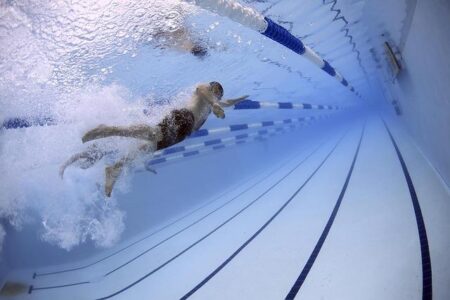

In a highly anticipated Homecoming meet, the University of Pennsylvania’s swimming and diving teams fell short against rival Princeton University, facing stiff competition on their home turf. Despite strong individual efforts, the Quakers were unable to secure a victory, as Princeton’s depth and consistency ultimately proved decisive. This result adds a challenging chapter to Penn’s season, prompting reflection as the teams look ahead to upcoming meets.
Penn Swimming and Diving Struggles to Gain Momentum Against Princeton at Homecoming
Despite the roaring crowd at this year’s Homecoming meet, Penn’s swimming and diving team struggled to maintain a competitive edge against a well-prepared Princeton squad. The Quakers showed flashes of strong individual efforts, most notably in the women’s 200-yard freestyle relay where sophomore Maria Keller took an early lead. However, consistency eluded the team overall as Princeton capitalized on fast exchanges and disciplined pacing. The Tigers dominated the diving boards, where Penn’s divers failed to score crucial points, leaving the Quakers trailing most of the meet.
Key Takeaways from the Meet:
- Princeton secured victories in six out of ten total events.
- Penn’s men’s 100-yard butterfly showed promise, with freshman Jake Harris finishing second.
- Strong relay performances from Princeton were pivotal in maintaining their lead.
- Underperformance on diving contributed to the widening point gap.
| Event | Winner | Winning Time | Points |
|---|---|---|---|
| Women’s 200-yard Freestyle Relay | Penn | 1:35.42 | 9 |
| Men’s 100-yard Butterfly | Princeton | 49.87 | 10 |
| Diving (3-meter) | Princeton | — | 12 |
| Men’s 500-yard Freestyle | Princeton | 4:40.27 | 10 |
Key Performance Gaps Identified in Relay and Individual Events
Despite strong efforts, Penn’s swim team struggled to close significant gaps in both relay and individual events during the Homecoming meet against Princeton. The relay teams, in particular, fell short of their usual synchronized execution, with several exchanges displaying noticeable delays. This technical lag ultimately cost Penn valuable seconds, putting them at a disadvantage that Princeton capitalized on decisively. Key leg performances revealed inconsistent pacing, with the anchor swimmers unable to bridge leads established by their opponents.
Individually, several athletes posted times that were off their season bests, highlighting areas needing refinement. The breaststroke and butterfly events saw the widest margins of defeat, underscoring a need for focused improvements in power and efficiency. Below is a breakdown of time deficits noted in select individual events compared to Princeton’s top performers:
| Event | Penn Time | Princeton Time | Gap (Seconds) |
|---|---|---|---|
| 200m Butterfly | 1:57.82 | 1:54.30 | 3.52 |
| 100m Breaststroke | 1:02.15 | 59.75 | 2.40 |
| 400m Freestyle Relay | 3:17.80 | 3:13.40 | 4.40 |
- Relay exchanges: Timing inconsistencies led to cumulative delays.
- Stroke technique: Inefficiencies in butterfly and breaststroke were evident.
- Race pacing: Several Penn swimmers faded in final splits, losing critical ground.
Coaching Strategies Suggested to Boost Team Competitiveness in Future Meets
In light of the challenging Homecoming meet against Princeton, the coaching staff has outlined a series of targeted approaches to amplify team performance moving forward. Emphasizing technical refinement, coaches aim to enhance stroke efficiency and diving precision, integrating video analysis sessions to provide swimmers with critical visual feedback. Additionally, they plan to increase focus on mental toughness training, fostering resilience under pressure through simulated high-stakes environments during practice.
To complement skill development, the program is investing in tailored conditioning regimens designed to boost endurance and power output. Key elements include:
- Interval-based swim sets with varying intensities
- Dryland strength training focusing on core stability
- Enhanced recovery protocols emphasizing nutrition and rest
- Team workshops on goal-setting and visualization techniques
| Strategy Focus | Expected Outcome |
|---|---|
| Technical Refinement | Improved stroke mechanics & fluidity |
| Mental Toughness | Enhanced race-day composure |
| Conditioning | Greater endurance & sprint capacity |
| Recovery Protocols | Reduced injury risk & quicker adaptation |
Insights and Conclusions
Despite a competitive effort from the Quakers, Princeton maintained their dominance in the Homecoming meet, ultimately securing the victory over Penn. As the season progresses, Penn swimming and diving will look to regroup and build on the experience gained from this challenging matchup. The Quakers now turn their focus to upcoming meets, aiming to improve their performance and close the gap against Ivy League rivals.