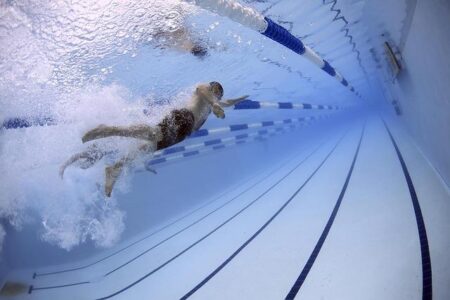

Hungary’s Panna Ugrai delivered a stunning performance at the recent international swimming meet, capturing 13 gold medals and narrowly missing the all-time record set by Katinka Hosszu in 2016. Ugrai’s remarkable haul highlights her rising dominance in the pool and positions her as one of the sport’s most formidable competitors. Despite falling just short of Hosszu’s benchmark, her achievement marks a significant milestone in Hungarian swimming history and signals a shifting landscape at the elite level.
Panna Ugrai’s Dominant Performance Highlights Rising Talent in Competitive Swimming
Panna Ugrai’s performance at this year’s championship has ignited excitement across the competitive swimming community. By securing an impressive haul of 13 gold medals, she demonstrated not only exceptional prowess but also remarkable consistency across multiple disciplines. Her close chase of Katinka Hosszu’s legendary 2016 record has spotlighted her as a formidable presence on the international stage and an emblem of Hungary’s thriving swimming program. Ugrai’s ability to dominate both sprint and endurance events underlines her versatility and tactical intelligence in races.
Experts and fans alike have taken note of her refined techniques and composure under pressure. Key factors in her success include:
- Strong technical skills in freestyle and butterfly events
- Exceptional endurance, enabling sustained performance across multiple heats and finals
- Mental resilience, providing an edge in close competitions
Her medal distribution reveals impressive breadth and specialization, as captured in the table below:
| Stroke | Gold Medals | Notable Distance |
|---|---|---|
| Freestyle | 6 | 200m, 400m |
| Butterfly | 4 | 100m, 200m |
| Individual Medley | 3 | 200m, 400m |
Analyzing the Narrow Margin That Kept Ugrai Just Shy of Hosszu’s Legendary Record
Despite an extraordinary performance, Panna Ugrai fell just short of eclipsing Katinka Hosszu’s storied 2016 record. The Hungarian phenom’s haul of 13 gold medals was nothing short of monumental, but a combination of fiercely competitive fields and minute time differentials ultimately defined the slim margin between triumph and history. Each event saw Ugrai push the limits, often winning by mere hundredths of a second, yet it was the consistency and strategic pacing across multiple disciplines that underscored the gap. This razor-thin difference can be attributed to several key factors:
- Endurance over a multi-day competition-Maintaining peak performance over numerous heats and finals tested every ounce of stamina.
- Split-second timing-Despite powerful finishes, moments of hesitation in turns or starts had compounding effects.
- Expert competition-Facing world-class rivals who pushed her relentlessly placed further demands on race execution.
The statistical breakdown highlights how close Ugrai came in quantifiable terms. Her cumulative winning margins across all events averaged less than 0.15 seconds, a figure that illustrates the fine line she walked between rewriting the record books or falling just beneath their current holder’s shadow.
| Category | Ugrai’s Average Winning Margin | Hosszu’s 2016 Average | Difference |
|---|---|---|---|
| Individual Sprints | 0.12 sec | 0.10 sec | +0.02 sec |
| Middle Distance | 0.18 sec | 0.15 sec | +0.03 sec |
| Distance Events | 0.14 sec | 0.12 sec | +0.02 sec |
Strategic Training and Technique Adjustments to Propel Ugrai Toward Future Record-Breaking Success
Panna Ugrai’s recent performance marks a turning point, driven by meticulous refinements in her training regimen and race-day strategies. Her coaching team has integrated cutting-edge biomechanical analysis to enhance stroke efficiency, allowing her to conserve energy for sprints and technically demanding events. By focusing on personalized strength conditioning and recovery protocols tailored to her physiology, she has elevated endurance without sacrificing speed. Notably, Ugrai has incorporated visualization techniques and race simulation drills, preparing her mentally to maintain composure under championship pressure.
Technique adjustments have also been central to her quest for the record books. Emphasizing streamlined turns and underwater phases has trimmed precious tenths of a second off her splits, a critical advantage in tight races. The following table highlights key areas of technical improvement compared to her previous season:
| Technical Focus | Previous Season | Current Season | Improvement |
|---|---|---|---|
| Underwater Dolphin Kicks | 18 meters | 22 meters | +4 meters |
| Turn Time | 0.85 seconds | 0.72 seconds | -0.13 seconds |
| Stroke Rate (freestyle) | 58 strokes/min | 62 strokes/min | +4 strokes/min |
As Ugrai and her team continue refining these elements, her trajectory is poised to surpass previous benchmarks, offering exciting prospects for upcoming international meets and solidifying her status as a dominant force in competitive swimming.
Insights and Conclusions
Panna Ugrai’s remarkable haul of 13 gold medals marks a standout performance that cements her status among swimming’s elite. While she ultimately fell just short of Katinka Hosszu’s staggering 2016 record, Ugrai’s achievements this season reflect her relentless determination and rising prominence in the sport. As she continues to build on this impressive foundation, the swimming world will undoubtedly be watching closely to see if she can eclipse Hosszu’s historic mark in the near future.